
Three years after the 2022 class was first selected, French Air Force pilot Sophie Adenot has become the first member of the new European Space Agency (ESA) cohort of career astronauts to blast off for the International Space Station (ISS).
Adenot holds a Master of Science from the Massachusetts Institute of Technology and is a colonel in the French Air and Space Force, where she trained as a helicopter pilot and became France’s first female helicopter test pilot. In 2022, she was selected from more than 22,500 applicants as one of five members of ESA’s newest class of career astronauts.
On Friday, 13 February, Adenot was launched aboard the SpaceX Crew-12 mission, travelling to orbit in a Crew Dragon spacecraft atop a Falcon 9 rocket. She is one of two mission specialists on the flight, alongside Roscosmos cosmonaut Andrey Fedyaev. The mission is commanded by NASA astronaut Jessica Meir, with fellow NASA astronaut Jack Hathaway serving as its pilot.
The spacecraft is now on its way to the ISS, with the journey expected to last approximately 24 hours. According to ESA, docking with the station is expected at around 21:00 CET on 14 February. Once aboard, the crew’s mission is expected to last approximately nine months.
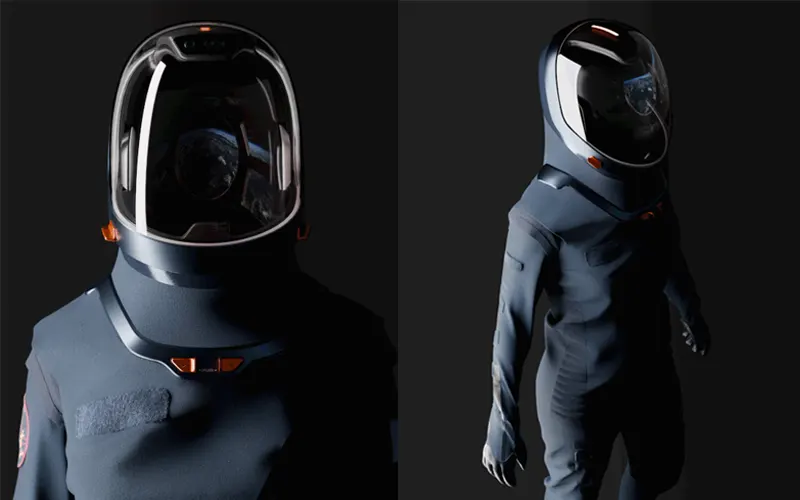
During her stay aboard the station, Adenot will conduct several planned experiments and technology demonstrations. One such demonstration involves EuroSuit, a prototype European intravehicular activity (IVA) spacesuit developed under a CNES contract by a consortium that included sporting goods retailer Decathlon. Adenot will evaluate the suit’s ergonomics, with a particular focus on how easily it can be donned and removed.
Although Adenot will be the first of the five career astronauts selected in 2022 to travel to the ISS, she is not the first from the broader astronaut class. Alongside the career astronauts, ESA also selected its first reserve astronaut corps, consisting of 12 members.
In early 2024, Sweden’s Marcus Wandt became the first of the 12 reserve astronauts to secure a mission to the ISS, flying aboard an Axiom-sponsored SpaceX Crew Dragon flight. Unlike career astronaut missions, “project astronaut” flights are financed by individual member states rather than through ESA’s budget. His stay aboard the station lasted only a few weeks, compared with the several-month missions typical of career astronauts. The “project astronaut” designation is a new one for ESA, allowing a reserve astronaut to serve temporarily as a member of the agency’s astronaut corps before returning to the reserve ranks afterward.