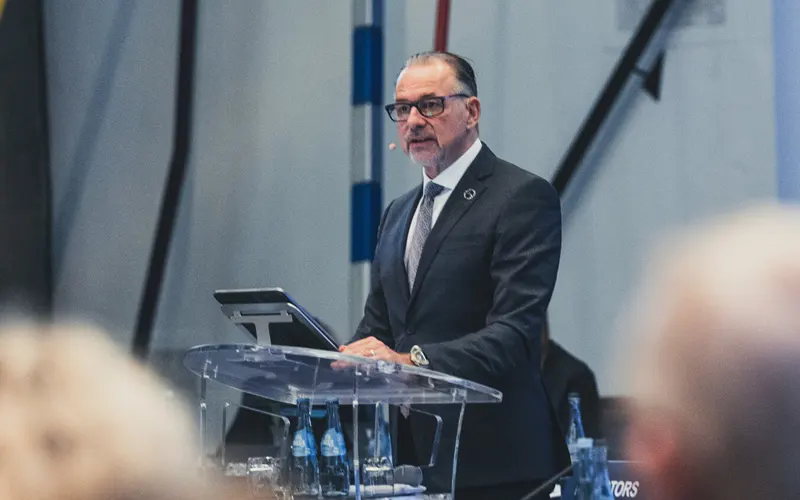
In an 18 May opinion piece, European Space Agency (ESA) Director General Josef Aschbacher argued that Europe must develop an independent human spaceflight capability.
Prior to 2022, ESA astronauts were transported to the International Space Station (ISS) aboard Russian Soyuz and US Dragon spacecraft. Following Russia’s invasion of Ukraine, ESA suspended its cooperation with Russia. This left the agency reliant on its barter arrangements with NASA to secure seats for its astronauts.
In his 18 May opinion piece, Director General Josef Aschbacher explained that recent changes to the Artemis architecture by the United States “signal a rapidly shifting landscape in human space exploration,” adding that “Europe has become too exposed to decisions beyond its control.” Against this backdrop, Aschbacher argued that “autonomous human spaceflight is not a luxury” but “a necessary anchor for Europe to secure its freedom to unlock the scientific, economic, strategic and geopolitical benefits of space and to inspire a new generation to shape Europe’s future.”
Aschbacher identifies “political will,” or the lack thereof, as a key stumbling block to sovereign European human spaceflight capabilities. He explained that while Member States have agreed to lay the foundations for Europe’s own human spaceflight capability, “political decisions have always fallen short of pursuing full autonomy in human exploration,” which he said has had “lasting consequences.”
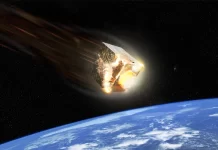
The foundations Aschbacher referenced are already taking shape across several ESA programmes. In 2023, the agency launched its LEO Cargo Return Service initiative, which aims to foster the development of a sovereign European space cargo transport service. Although the initiative is initially focused on cargo, ESA required all eligible vehicle designs to be adaptable for future crew transportation.
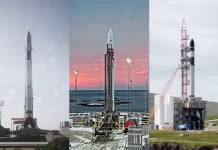
In addition to potential crew vehicles, the agency launched a Crew Launch Abort Demonstrator initiative in November 2025 that would lay the foundation for a human-rated launch vehicle. With a system like this fitted to Ariane 6, Europe would close the loop on a crewed launch capability. Beyond a launch capability, ESA is also exploring where future European crews would go.
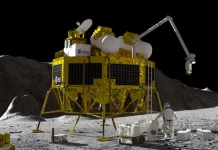
As part of the agency’s planning for a post-ISS future, in February 2026 ESA launched a call for a study to explore the development of a European-led space station. The studies are expected to consolidate the feasibility and technology requirements of the future station. Two parallel studies are expected to be awarded, with the results used to enable ESA decision-making for its post-ISS transition by the end of 2026.
To address the political will needed to build on these foundations, Aschbacher outlined a “convergence of political decisions and funding milestones.” This begins with ESA’s Council meeting in June, followed by the International Space Summit in September, ESA’s Intermediate Ministerial Council meeting in December, and the agency’s full Ministerial Council meeting in late 2028. He also identified the European Union’s finalisation of its Multiannual Financial Framework for 2028–2034 as a key element of this convergence.
Aschbacher asked European nations to “resist the temptation to look inward,” adding that “no single Member State can achieve on their own what we can achieve together.” And while he urged a united front, he also warned against unchecked partnerships. He explained Europe should be mindful to “not let cooperation slip into dependency.”