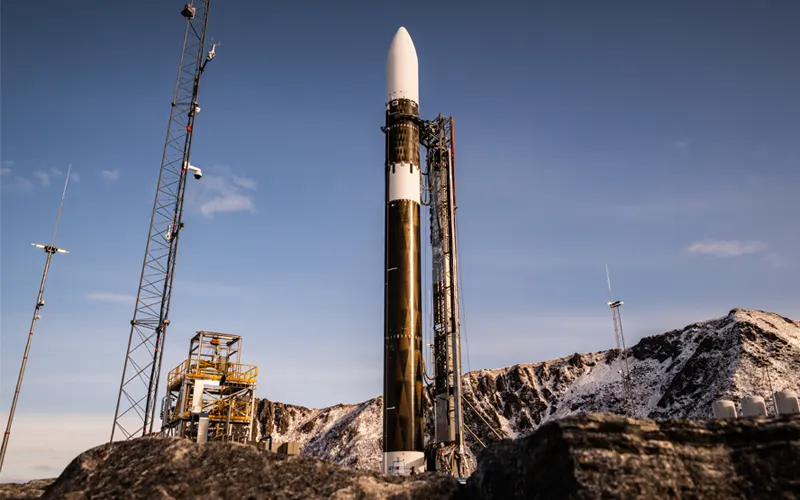
German rocket builder Isar Aerospace has signed an agreement with Canada’s Maritime Launch Services to develop a dedicated launch facility at Spaceport Nova Scotia. The first launch of an Isar Aerospace Spectrum rocket from the site is expected in 2028.
Announced on 7 July, the agreement will see Maritime Launch Services provide a licensed launch site, including the “launch pad, assembly, integration and testing (AIT) facilities, a launch operations center, and a facility for payload integration.” In return, Isar Aerospace will pay US$3.75 million per quarter under a 10-year agreement, with a 30-month fee waiver period following the first year of the contract. This initial element of the deal amounts to US$112.5 million.
In addition to the 10-year agreement, the deal includes options for two five-year extensions and provisions for additional fees paid to Maritime Launch Services on a per-launch, cost-plus basis.
“By combining Isar Aerospace’s launch vehicle, Spectrum, with Spaceport Nova Scotia’s licensed infrastructure, we are creating the conditions for reliable orbital launch services from Canada,” said Stephen Matier, President and CEO of Maritime Launch Services.
While the 7 July agreement builds on the letter of intent signed in late May, the deal remains conditional. According to a press release, the two companies must still agree on a statement of work and programmatic milestones by 1 September 2026. The designated launch pad must then be handed over to Isar Aerospace by 1 November 2026, with additional infrastructure at the spaceport completed by 31 December 2027.
Despite presenting the new launch site as a key element of its “roadmap to bring full end-to-end launch capability to sovereign nations,” Isar Aerospace has yet to demonstrate that capability itself. The only flight of its Spectrum rocket to date ended shortly after liftoff, while a series of technical and range-related setbacks have delayed its second flight by approximately six months and counting.
In its most recent update on 15 June, Isar Aerospace said it had abandoned its latest launch attempt after detecting “off-nominal behavior in the vehicle’s fluid systems” and was analysing data to identify the root cause. It has not provided a revised launch date since then.