
Germany is considering building a dedicated launch facility for its armed forces to ensure military satellites can be deployed without having to compete for capacity with commercial payloads.
German Defence Minister Boris Pistorius announced that the government was considering the proposal during a 23 July visit to Isar Aerospace’s facilities near Munich. Pistorius said that existing European launch capacity, including capacity available through existing facilities in Norway and the United Kingdom, would not be sufficient to meet future demand. Germany therefore needed to consider whether the Bundeswehr, the country’s armed forces, required guaranteed access to its own launch infrastructure.
“That is why we are currently also considering a Bundeswehr-owned launch site, because our national security must not be stuck in the traffic jam of commercial launch queues,” Pistorius said.
When asked for details about the proposal, Pistorius stressed that work on the project was still in its early stages.
“I said that we are considering it. We are at the beginning of those considerations,” he said. “This is completely new terrain for us as well. But I believe it is at least worth considering.”
Pistorius did not identify where the facility could be established. While he indicated that a Bundeswehr-owned launch site would not necessarily be located on German soil, Pistorius declined to name any country specifically.
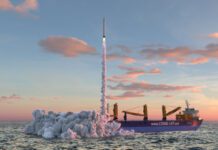
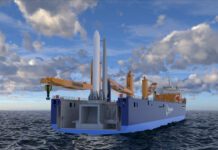
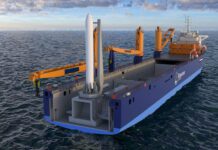
A 2024 report from Germany’s Office of Technology Assessment concluded that Germany’s dense population means that only coastal areas or the open sea are suitable for launch sites. Germany has already explored ways to overcome this geographical reality, primarily through a proposal from the German Offshore Spaceport Alliance (GOSA) for a floating launch platform in the North Sea.
According to a 2020 feasibility study, the development and operation of the floating launch platform would cost between €22 and €30 million over six years. To date, publicly announced federal funding for the project totals €2.87 million, with an initial €2 million award in September 2023 and a further €870,000 in February 2025.
The project has, however, failed to meet its announced milestones. An initial suborbital test flight that was expected to take place in April 2024 has still not occurred. The alliance had also previously suggested that regular orbital launches could begin from 2026, a milestone that has likewise not been met.