The European Space Agency has awarded Thales Alenia Space in Italy a contract to build two identical Sentinel-1 Next Generation satellites. The contract represents the first phase of the project and is worth €700 million.
A total of four Sentinel-1 first-generation satellites were launched between 2014 and 2025, with three remaining operational after Sentinel-1B was lost to a power issue. Sentinel-1A is also due for decommissioning at the end of this month after Sentinel-1D was fully commissioned in May following its launch in November 2025. Sentinel-1D will join Sentinel-1C, which was launched in December 2024, to make up the two-satellite operational constellation.
While Sentinel-1C and 1D have a stated operational lifespan of seven years, both carry enough onboard consumables to support up to 12 years of operations. This would allow the two-satellite constellation to remain operational into the late 2030s. However, with one of the four first-generation satellites falling short of its seven-year stint, ESA is looking to ensure the long-term continuity of Europe’s radar Earth observation capabilities.
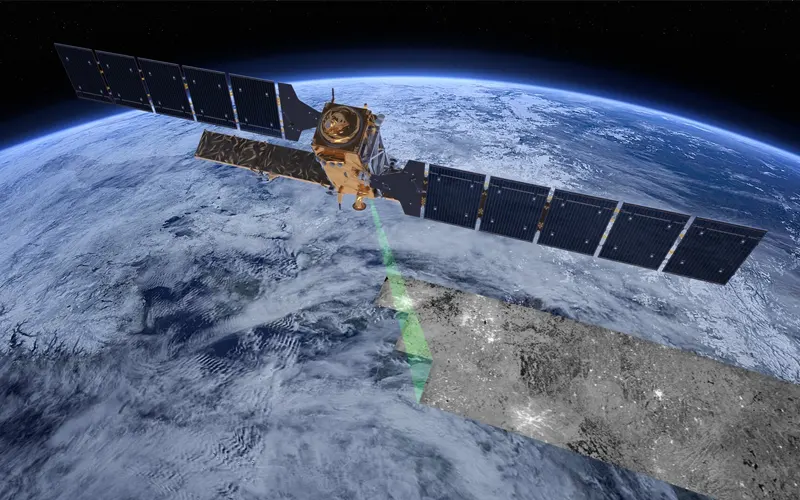
The Sentinel-1 NG (Next Generation) satellites will provide continuity while also improving the system’s performance. According to a 10 June ESA press release, the primary improvements will include significantly wider coverage and a fourfold improvement in resolution, from 5 by 20 metres today to 5 by 5 metres. Coverage will also be extended to the polar regions.
The initial development phases of the Sentinel-1 NG satellites were carried out under ESA’s FutureEO programme between 2021 and 2023 by Thales Alenia Space and Airbus Defence and Space. While the next stages of the new satellites’ development were expected to begin in 2023, implementation was delayed, with ESA only awarding the contract to Thales Alenia Space at ILA Berlin on 10 June 2026. This delay has likely pushed back the initial 2032 target launch date for the first Sentinel-1 NG satellite.
“While current Sentinel-1 satellites continue to serve users in orbit, we are excited to see the next-generation mission take shape,” said Simonetta Cheli, ESA’s Director of Earth Observation Programmes. “We are pleased to entrust Thales Alenia Space with the responsibility of developing this important new capability.”
Thales Alenia Space in Italy will serve as prime contractor for the two Sentinel-1 NG satellites, while Airbus Defence and Space in Germany will supply their C-band synthetic aperture radar instruments. According to Cheli, the €700 million contract awarded to Thales Alenia Space covers only the first tranche of the overall mission. However, she did not specify how many further tranches would be needed.