
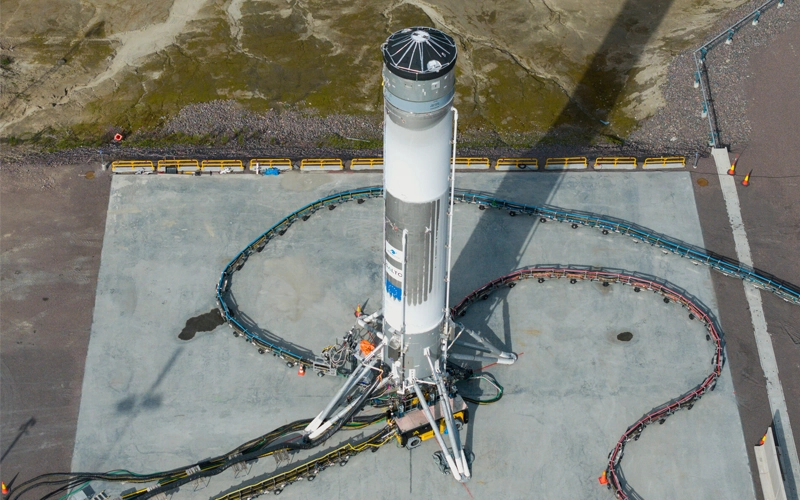
The European Space Agency’s (ESA) Director of Space Transportation, Géraldine Naja, said on 22 October that she was uncertain whether the agency would be able to complete the first flight of its Themis reusable rocket demonstrator before the end of the year.
Speaking at a media briefing following ESA’s 350th Council meeting in Paris, Naja explained that approaching winter conditions at Sweden’s Esrange Space Center could prevent the test from taking place this year. She added that the agency would make a go/no-go decision before the end of November on whether to proceed with the flight before the winter shutdown.
During his annual press briefing on 8 January, ESA Director General Josef Aschbacher said the agency expected to conduct its first Themis hop test in the first quarter of 2026. Before Thursday, all official Themis updates had been less specific, with neither ESA nor ArianeGroup committing to a revised flight date.
That lack of specificity was reflected in ArianeGroup’s latest update, published on 7 October following the demonstrator’s successful second wet dress rehearsal at Esrange. In a statement, the company said that “teams are now working on defining a window for the next test.”
During her comments on 22 October, however, Naja did offer a more concrete indication of the programme’s timeline. She explained that the development schedule required a hop test to take place before June 2027. Naja appeared to be referring to both the first and second hop tests, although it was unclear whether the deadline applied to one or both flights.
When asked to clarify whether Naja’s reference to a June 2027 deadline applied to both planned hop tests, an ESA spokesperson did not directly address the question. Instead, the spokesperson reiterated that a decision on whether to attempt the first hop test before the winter shutdown would be made by the end of November, referring further questions to the project’s prime contractor ArianeGroup.
The initial two-hop Themis flight campaign is being conducted under the European Union-funded SALTO initiative, which has a total budget of €42.8 million. The programme aims to complete two low-altitude hop tests, demonstrating that Themis can be launched, recovered and then launched again.

Is that the sound of Berger’s Law I can hear approaching? I really hope not. C’mon ESA, Honda can do it!
The question is for me: Is Themis actually about building rockets that work and compete on the market, or is it a kind of employment project for rocket engineers who would be without a job otherwise? Because the latter would explain why they keep on working on Themis (and have been since 2020) without any actual results.