Political and budgetary uncertainty in the United States poses a risk to long-term planning for space exploration programmes, according to a Polish government minister.
In a 13 October response to a parliamentary question, Polish Deputy Minister of Development and Technology Michał Jaros said Poland remained interested in participating in NASA’s Artemis programme but raised concerns about its financial transparency, cost and accessibility to international partners.
“At the present stage, there [has been] no transparency concerning the financing framework or the broader context of NASA’s planned activities,” Jaros wrote.
The minister was responding to Polish MP Adrian Zandberg, who had raised concerns about the Polish Space Agency’s lack of involvement in the Artemis Accords and other NASA programmes and asked what steps the government was taking to support Poland’s participation.
Jaros explained that uncertainty “in budgetary and political conditions in the United States” represented an additional risk to long-term planning, noting that such uncertainty had historically affected the pace and scope of major exploration programmes.
In addition to his concerns about transparency and long-term planning, Jaros questioned the practical opportunities available to countries seeking greater involvement in NASA-led exploration initiatives.
“From Poland’s perspective, programmes implemented directly by NASA entail very high costs and limited accessibility for external partners.”
Against this backdrop, Jaros said Poland would continue to work closely with its partners in the European Space Agency (ESA), identifying the Argonaut lunar lander as a priority.
“In lunar exploration, Poland’s priority remains cooperation within the European Argonaut programme,” Jaros wrote.
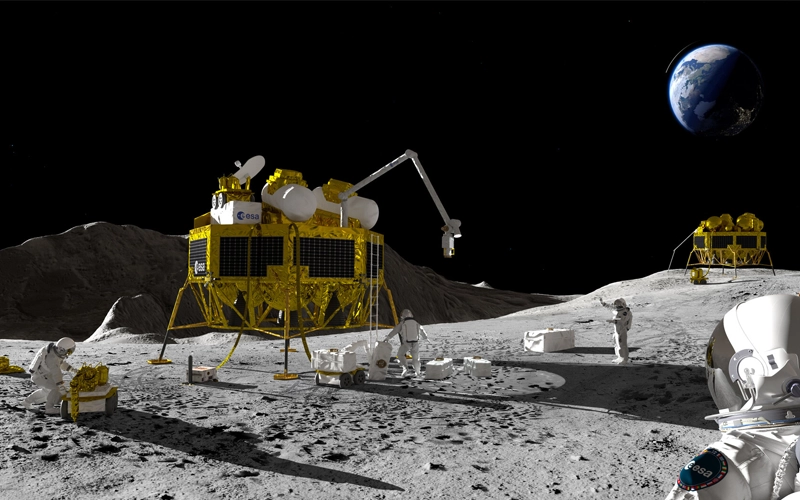
Argonaut is being developed by ESA to provide Europe with independent access to the lunar surface. The lander is designed to deliver up to 1,500 kilogrammes of cargo, including scientific experiments, rovers and infrastructure to support future exploration missions.
In January 2025, ESA awarded a €862 million contract to an industrial consortium led by Thales Alenia Space in Italy to develop the lander’s Lunar Descent Element. The agency is currently targeting 2030 for the launch of the first Argonaut mission.