European space logistics startup The Exploration Company has raised $450 million (€387 million) in a Series C funding round to support the development of its Nyx capsule and Storm rocket engine.
Announced on 8 September, the round was co-led by US venture capital firm Bessemer Venture Partners, London-based venture capital firm Atomico, and the Scaleup Europe Fund, a European growth investment fund managed by Swedish private equity group EQT. Existing investors also contributed to the round. The new investment brings The Exploration Company’s total funding secured since its founding in 2021 to approximately $680 million. The company’s last funding round was a €150 million Series B in late 2024.
“This financing will allow us to execute with urgency: to bring Nyx to the International Space Station and safely back to Earth, while accelerating Storm, the high-thrust propulsion capability Europe needs for its future reusable heavy launcher,” said The Exploration Company CEO Hélène Huby.
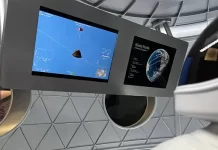
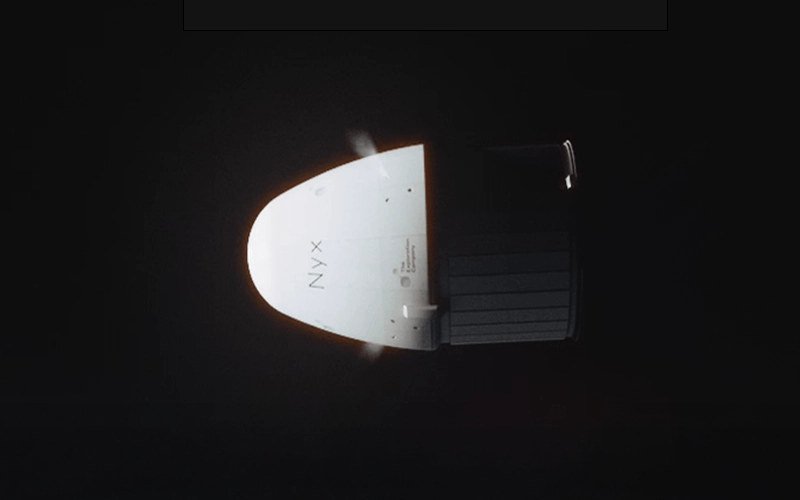
According to its 8 September press release, The Exploration Company’s near-term focus for the new funding will be the development of its Nyx reusable space capsule, designed to ferry cargo to and from low Earth orbit (LEO). Future iterations of the vehicle will add capabilities to carry crew to and from LEO and cargo to the surface of the Moon. In a June announcement, The Exploration Company said Nyx’s first demonstration flight was expected to launch in 2028.
The Series C funding will also be used to accelerate the development of Storm, a reusable high-thrust rocket engine powered by liquid oxygen and biomethane. According to The Exploration Company, Storm is intended to provide the propulsion foundation for a future reusable European super-heavy launcher capable of carrying up to 40 tonnes to low Earth orbit in a reusable configuration.
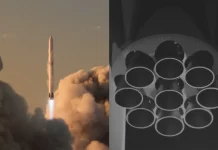
In June, the company briefly added mention of a reusable heavy-lift rocket called Yrene to its website. Imagery published at the time appeared to show the vehicle powered by nine Storm engines. However, a company spokesperson subsequently told European Spaceflight that Yrene was a “long-term concept” and that its short- and medium-term focus remained on its capsule and propulsion programmes. References to Yrene were later removed from the company’s website.
According to the 8 September press release, the funding will enable the company to conduct subscale thrust chamber and pre-burner tests in the coming months, followed by an oxygen-rich power-pack test and a workhorse engine test over the next several years.
The company also added that it has secured more than $2 billion in contracts and commitments from public and private customers. These include agreements with the European Space Agency and commercial space station operators. The combination of contracts and commitments makes it difficult to determine how much of that $2 billion represents firm contracted revenue rather than non-binding or conditional future business.