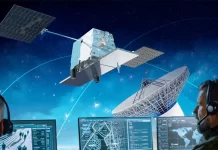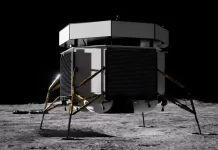

Thales Alenia Space has shipped the Orbit Insertion Module for the European Space Agency’s Earth Return Orbiter from its facilities in Turin to Airbus Defence and Space in Stevenage, UK.
As part of its contribution to the Mars Sample Return mission, a joint effort between the European Space Agency (ESA) and NASA, ESA agreed to supply the Earth Return Orbiter, which will retrieve the samples after being launched from the Martian surface and return them to Earth for study. In October 2020, ESA awarded Airbus Defence and Space the €491 million contract to build the Earth Return Orbiter. In turn, that same month, Airbus awarded Thales Alenia Space a €130 million subcontract for the Orbit Insertion Module, a propulsive stage that will enable the spacecraft to be inserted into orbit around Mars.
In December 2024, Thales Alenia Space announced that it had completed the Proto-Flight Model of the Orbit Insertion Module. A proto-flight model serves both as a prototype and a flight-ready unit. With the announcement, the company revealed that the next step would be a Qualification Static Test to ensure the module was fit for purpose.
On 28 July, Thales Alenia Space announced that the module had passed its test campaign with “excellent results.” According to the update, the company had packed and shipped the Orbit Insertion Module from its Turin facilities to Airbus in Stevenage a few days earlier. The delivery marks a key milestone in the development of the Mars Return Orbiter.
The broader Earth Return Orbiter project passed a key milestone in July 2024 with the completion of the Platform Critical Design Review. This review confirmed the performance, quality, and reliability of the mission’s systems. With its successful conclusion, Airbus advanced to full spacecraft development, including the integration and testing of its various components, among them the Orbit Insertion Module.
While the development of Europe’s contribution to the Mars Sample Return mission progresses, uncertainty continues to surround NASA’s. Earlier this year, an initial fiscal year 2026 budget proposal from the White House included the cancellation of the Mars Sample Return mission. However, a subsequent House appropriations proposal from late July allocated $300 million for the mission. Budgetary uncertainty is just one of the challenges, though. NASA officials are currently studying two different architectures for the mission, with a decision on their viability not expected until mid-2026. Meanwhile, ESA continues to develop the Earth Return Orbiter, a key element of the mission, and remains committed to delivering the critical hardware, ensuring the European contribution stays on track despite the ongoing uncertainties.
Keep European Spaceflight Independent
Your donation will help European Spaceflight to continue digging into the stories others miss. Every euro keeps our reporting alive.