
Spanish satellite operator Sateliot has signed a launch services agreement with PLD Space to launch its first two high-capacity 5G D2D (Direct-to-Device) Tritó satellites aboard a dedicated MIURA 5 mission.
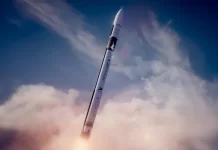
Headquartered in Elche, on Spain’s Mediterranean coast, PLD Space is working toward the first flight of its 35.7-metre-tall MIURA 5 rocket in 2026. The rocket is designed to deliver payloads of up to 1,040 kilograms to low Earth orbit and will initially launch from a new multi-user facility being built on the grounds of the Guiana Space Centre’s former Diamant launch complex.
On 17 December, PLD Space announced that Sateliot had selected PLD Space to carry its first two Tritó satellites to orbit aboard a dedicated MIURA 5 mission in 2027. According to the company, Sateliot selected PLD Space “based on MIURA 5’s ability to provide an independent, dedicated service tailored to the client’s specific needs, ensuring optimal launch conditions for deploying its space infrastructure.”
“With this agreement, we fulfill two principles we set for Sateliot from the start: national and European autonomy and sovereignty,” explained Sateliot CEO Jaume Sanpera. “By launching our satellites with a Spanish company like ours, we support the Spain Brand and guarantee D2D connectivity worldwide in any scenario, with enhanced capabilities for defense and security, as well as civil use, serving as a strategic backup when terrestrial networks are unavailable or fail.”
Each Tritó satellite will have a mass of approximately 160 kilograms. Once in orbit, the satellites will provide dual connectivity for IoT (Internet of Things) devices and direct-to-device 5G connectivity for mobile devices, supporting data, voice, and video services.
Within four years of its initial flight, the company plans to begin recovering and reusing an upgraded MIURA 5 variant known as Block 1.1. This early recovery and reuse system will provide a foundation for the company’s future reusable MIURA NEXT vehicles, which it expects to introduce in the 2030s, offering significantly greater payload capacity than their predecessor.
Keep European Spaceflight Independent
Your donation will help European Spaceflight to continue digging into the stories others miss. Every euro keeps our reporting alive.