

Update: ESA have cancelled this call citing “programmatic adjustments.”
The European Space Agency (ESA) has issued a call for proposals outlining its intention to purchase commercial cargo transportation services to the International Space Station (ISS). The mission, which must be completed by the fourth quarter of 2028, is intended to meet the agency’s obligations under the ISS Common System Operations Costs (CSOC) framework from 2026 until the station’s decommissioning.
Under the CSOC framework, NASA, ESA, JAXA, and CSA share responsibility for the ongoing expenses of operating and maintaining the International Space Station. These costs cover essential services, including crew and cargo transportation, life-support systems, power, communications, and general station upkeep. Each partner contributes either financially or through in-kind services. In the past, ESA met its CSOC obligations through cargo transport provided by the Automated Transfer Vehicle and, more recently, by supplying the European Service Module for NASA’s Orion spacecraft.
Published on 3 October, the call for the CSOC Cargo Commercially Procured Offset initiative outlines a single mission to transport 4,900 to 5,000 kilograms of pressurised cargo to the ISS. The mission will, according to the call, provide “a strategic offset that secures ESA’s astronaut flight opportunities and ISS utilisation while also building European capabilities in Low Earth Orbit (LEO) logistics.” The call, however, somewhat contradicts this second element of the programme.
In the call’s “Letter of Invitation”, the agency stated that, due to regulatory requirements that include certifications provided by NASA, the competition would be open to economic operators from the United States. ESA did, however, add that preference would be given, to the “fullest extent possible”, to bids from its Member States.
While the call is set to close on 31 October, the execution of the mission’s procurement will only move forward if the necessary funding is approved by Member States at ESA’s Ministerial Council meeting in November. It will then need to be approved by the relevant Programme Board and the Industrial Policy Committee.
In May 2024, ESA announced Thales Alenia Space and The Exploration Company as recipients of Phase 1 development contracts for its LEO Cargo Return Service initiative. With agency backing, Phase 2 recipients, which are expected to be named in early 2026 following the ESA Ministerial Council meeting in November, will attempt to complete demonstration missions to the ISS before the end of 2028. However, it’s unlikely that these recipients will be able to significantly accelerate their respective vehicles’ development to fly those demonstration missions and certify them for actual cargo flights to the station. Even if they do, options such as The Exploration Company’s Nyx spacecraft fall well short of the 5,000-kilogram mass requirement, meaning at least two flights would be needed.
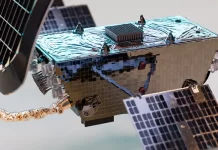
The SpaceX Cargo Dragon is a possible option, but with a maximum capacity to the station of 3,300 kilograms, it too would require two flights. This leaves the Northrop Grumman Cygnus spacecraft, with the newly introduced XL version capable of delivering 5,000 kilograms to the ISS. This option would also include a significant contribution from a European partner, as Thales Alenia Space manufactures the spacecraft’s pressurised cargo module.
Keep European Spaceflight Independent
Your donation will help European Spaceflight to continue digging into the stories others miss. Every euro keeps our reporting alive.


Given that there is nothing in the European pipeline that could meet those requirements and that Cygnus XL is the only extant vehicle that could, it looks like an exercise in the optics of justifying the inevitable.
It would be interesting to know whether that payload requirement is part of ESA’s obligation under CSOC and it will also be interesting to see how much of it is actually used so close to ISS de-commissioning.