The Italian Space Agency (ASI) is exploring the development of a dedicated orbital platform capable of generating artificial gravity to support scientific research and technology development.
ASI announced the initiative on 8 October and expects to open a consultation with the scientific and technological community later this month to gather research requirements, ideas and potential uses for the proposed platform. According to the agency, future missions to the Moon, Mars and other planetary bodies will require a better understanding of how human biology, systems and materials behave under different gravitational conditions.
The proposed platform would enable long-term experiments at controlled gravity levels, from microgravity to conditions comparable to those on the surface of the Moon and Mars. In an accompanying information leaflet, ASI outlined a preliminary concept for the platform that would accommodate small, modular experiments, each occupying the volume of a few CubeSat units.
ASI identified several potential research areas, including life sciences, fluid dynamics, materials and manufacturing processes, and planetary exploration technologies. However, the agency stressed that the list was not exhaustive and invited researchers to propose additional applications.
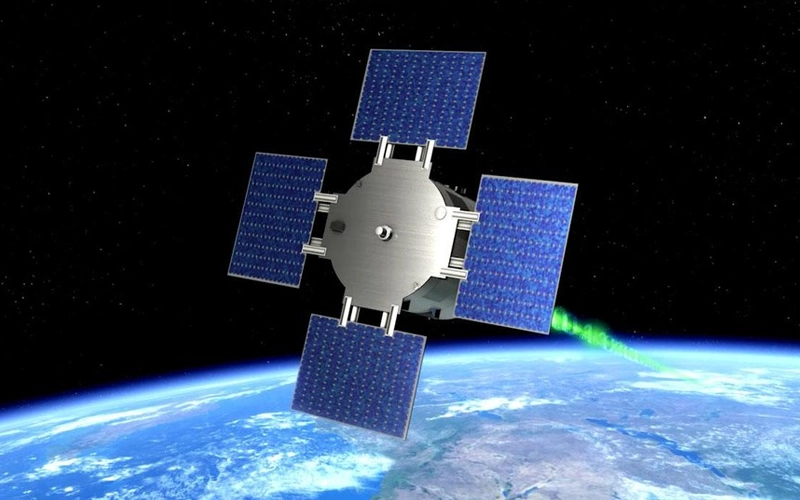
Generating artificial gravity in orbit is not new. In addition to NASA experiments, the German Aerospace Center (DLR) launched its own artificial-gravity research satellite in December 2018.
The Eu:CROPIS satellite generated artificial gravity comparable to that on the Moon and Mars by rotating around its axis. The mission was designed to test a closed-loop life support system that could support future crewed missions by converting synthetic urine into fertiliser for growing tomatoes. Ultimately, a software problem prevented the spacecraft from activating its two greenhouses. Despite this, three other onboard experiments successfully collected data before the mission ended in December 2019.