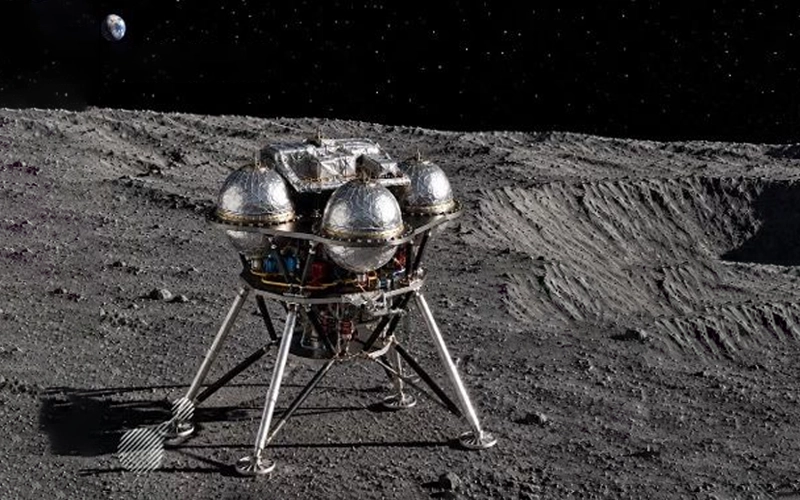
The Exploration Company has announced it will test a lunar hopper demonstrator called ONEIROS in the United Arab Emirates in 2027.
ONEIROS is a privately funded initiative focused on validating technologies that could eventually support lower-cost access to the lunar surface. The company plans to build a one-tonne demonstrator that will use a throttleable methane-fuelled rocket engine, autonomous navigation, and hazard-avoidance systems to demonstrate the capabilities needed for controlled landings on the Moon.
According to the abstract of a paper presented at the 77th International Astronautical Congress (IAC) in Antalya, Türkiye, work on the project began earlier this year. Teams have already built several breadboards to reduce technical risks ahead of the planned flight demonstration next year.
The decision to conduct the flight demonstration in the UAE follows a memorandum of understanding signed with the country’s national space agency to support the project and develop local testing capabilities. While no subsequent binding agreement has been announced, the abstract confirmed that testing would take place in “the UAE desert.”
The Exploration Company intends to follow ONEIROS with Hilal, a demonstrator designed to validate precision landing capabilities and methane/oxygen propulsion technologies on the Moon’s surface. Following that, the company told European Spaceflight that it would take “step-by-step approach to lunar vehicle development.”
Beyond its lunar lander programmes, The Exploration Company is also part of a consortium selected by the European Space Agency in February 2026 to conduct a Lunar Remote Camp study. Led by the Danish firm SAGA Space Architects, the consortium is developing a concept for a deployable lunar shelter that would initially support robotic operations, with the potential to accommodate astronauts during short stays on the lunar surface.
Update: This article was updated on 8 Oct to include information about the company’s post-Hilal direction for its lunar vehicle development.