The European Space Agency has announced that its Draco mission has passed its Critical Design Review, clearing it to enter full-scale manufacturing, integration and testing ahead of its planned launch in 2027.
ESA announced the milestone on 17 August, saying the review had validated the design of all of Draco’s systems. With the CDR complete, the mission team can now move ahead with manufacturing and integration of the flight hardware, followed by a testing campaign that will include high-altitude balloon drop tests.
“Our mission passed its Critical Design Review in just a year after the last review, keeping the mission on its tight schedule,” ESA Draco project manager Stijn Lemmens said. “It’s been impressive to see these new technologies being developed and tested successfully in so little time.”
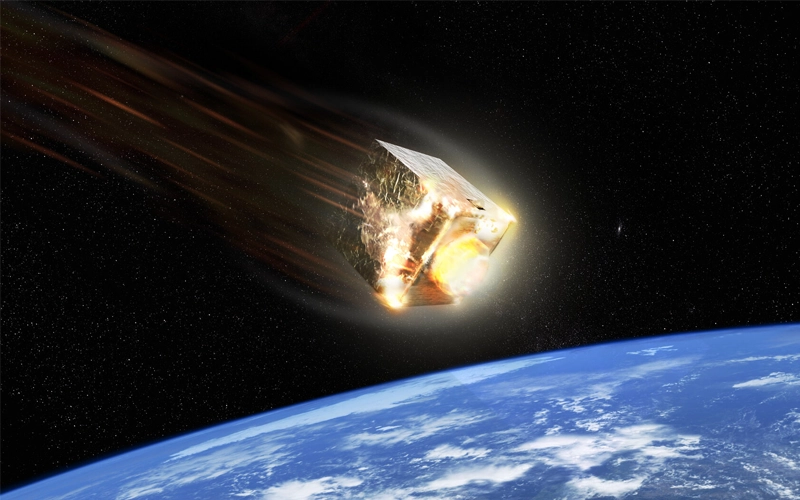
With the Destructive Reentry Assessment Container Object (Draco) mission, ESA aims to gather data from inside a satellite as it breaks apart during atmospheric reentry. The mission is intended to help the agency fill gaps in existing models used to predict spacecraft fragmentation and burn-up during atmospheric reentry.
Development of Draco is being led by Spain’s Indra Group, which assumed responsibility for the mission following its acquisition of Deimos Space in October 2024. A month before the acquisition, ESA had awarded Deimos a €17 million contract to develop the mission.
Once launched in 2027, Draco will be placed on a destructive reentry trajectory by its launch vehicle’s upper stage at an altitude of approximately 1,000 kilometres. Approximately 12 hours after liftoff, the spacecraft will re-enter Earth’s atmosphere, with its nearly 200 onboard sensors and four cameras recording its fiery demise and storing the resulting data inside the 40-centimetre reentry capsule.
After reentry, the capsule will deploy a parachute to slow its descent sufficiently to establish a connection with a geostationary satellite above and transmit the collected data. It will have a roughly 20-minute window to complete the transmission before splashing down, bringing the mission to an end.