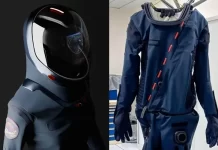
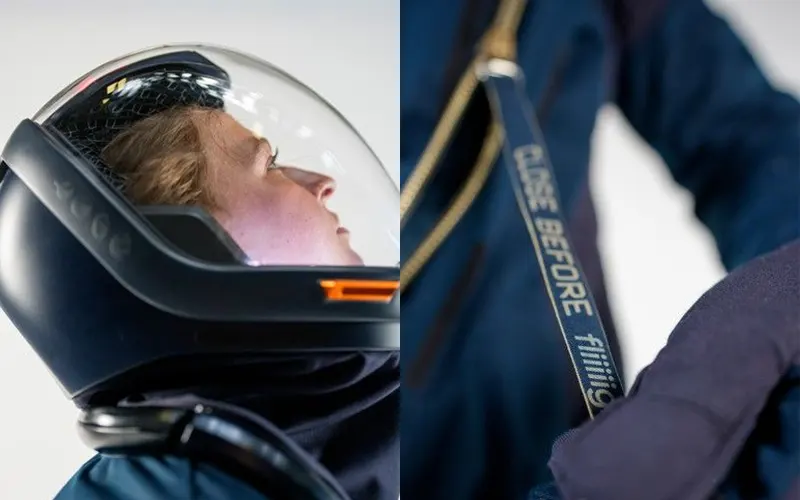
ESA astronaut Sophie Adenot has tested a European intravehicular activity (IVA) spacesuit prototype aboard the International Space Station (ISS). In addition to testing in space, a second prototype has undergone a water survival test campaign in Marseille.
The EuroSuit project was initiated by the French space agency CNES in December 2023, with its development led by a consortium that includes Spartan Space, the Institute of Space Medicine and Physiology (MEDES), and sporting goods retailer Decathlon. In May 2026, an early prototype of the spacesuit was sent to the ISS for testing aboard SpaceX’s 34th mission under NASA’s Commercial Resupply Services (CRS) contract.
In its daily update of ISS operations on 11 June, NASA revealed that, after processing microbe samples in the Kibo laboratory module for the Odyssey biotechnology investigation, Adenot moved to Europe’s Columbus laboratory module to begin testing the EuroSuit prototype. The primary goal of the testing was to determine whether the spacesuit could be donned in 2 minutes or less. However, Adenot also assessed how freely she could move while wearing it.
After completing the testing, Adenot documented her experience for engineers to review. The questions covered how long it took to put on and remove the suit, its ergonomics and comfort, and how easily Adenot could interact with objects while wearing it.
The testing carried out by Adenot on 11 June appears to have been the second session. A similar NASA update from 29 May did not explicitly mention EuroSuit but described Adenot trying on a “prototype internal spacesuit.” A total of three sessions are planned, with Adenot monitoring any improvement in the speed and ease of donning the suit. According to NASA, once testing is completed, the suit will be discarded.
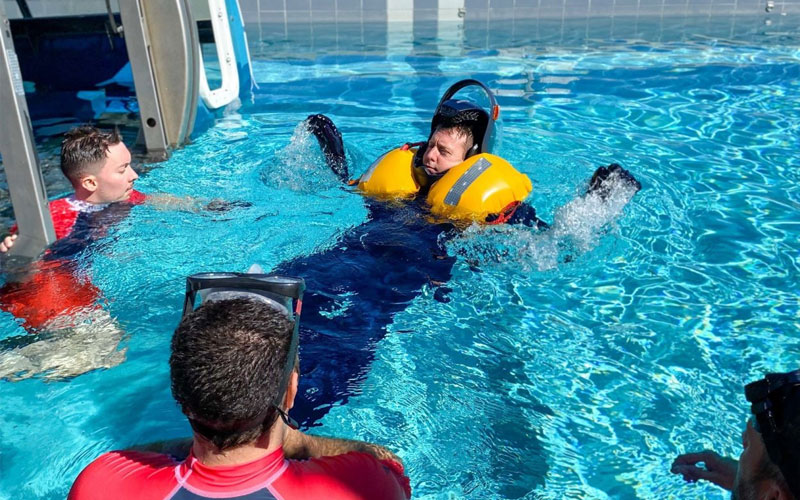
On 12 June, the day after Adenot conducted the second testing session aboard the ISS, consortium leader Spartan Space completed a EuroSuit water survival test campaign in Marseille. In addition to a buoyancy test, the campaign included evaluations of several key scenarios, including emergency egress, life raft boarding, and recovery by helicopter or rescue vessel. According to the company’s update, the “results are highly encouraging and will support the next stages of qualification.”
Under its current contract with CNES, the Spartan Space-led consortium will now develop a final ground version of the suit based on lessons learned from initial testing. This phase of the project is expected to be completed by the end of 2027 and to serve as a precursor to the development of a flight version of the spacesuit.