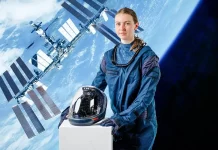
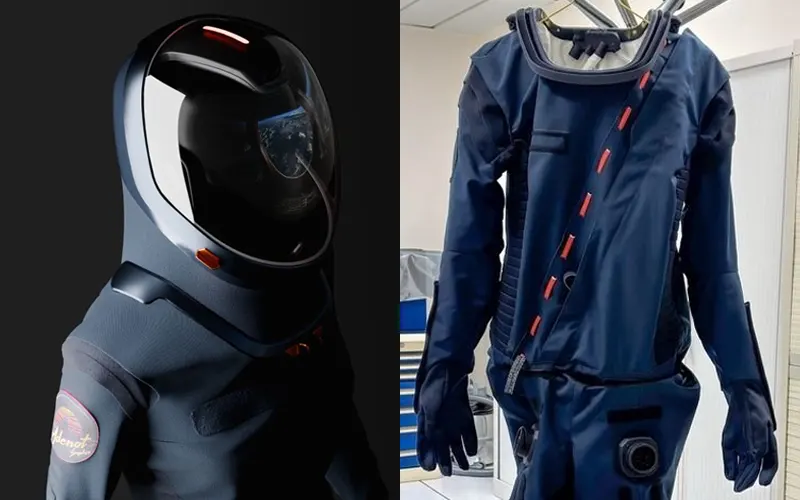
A European intravehicular activity (IVA) spacesuit prototype developed under a CNES-initiated programme was transported to the International Space Station (ISS) aboard a SpaceX Dragon spacecraft. The spacesuit will be tested aboard the station by ESA astronaut Sophie Adenot.
The EuroSuit project was initiated by CNES in December 2023 as part of the agency’s Spaceship FR programme, which aims to foster the development of core technologies required for future crewed missions beyond low Earth orbit.
“In line with Europe’s ambition to achieve greater autonomy in human spaceflight, CNES has decided to focus on intravehicular suits,” said Sébastien Barde, Deputy Director for Exploration and Human Spaceflight at the agency. “By relying on the exceptional expertise of our partners, we are prepared to deliver this type of suit when the time comes. In doing so, we are fully playing our role of supporting and guiding our industry.”
A consortium led by Spartan Space, with the Institute of Space Medicine and Physiology (MEDES) and sporting goods retailer Decathlon as partners, completed an initial study for the project in early 2024 and was awarded a follow-on contract to manufacture a prototype to be tested aboard the ISS following an October 2024 call.
Launched on 15 May aboard SpaceX’s 34th mission under NASA’s Commercial Resupply Services (CRS) contract, the prototype arrived at the station two days later. The Dragon spacecraft, carrying nearly 3,000 kilograms of cargo, docked with the station’s Harmony module on 17 May at 10:37 UTC.
The suit will be evaluated aboard the station by French astronaut Sophie Adenot, who is currently just over 90 days into a mission that was initially expected to last up to nine months. That would have made it the longest mission ever undertaken by an ESA astronaut. However, NASA’s revised crew rotation schedule now suggests the mission will last about seven months.
Testing will focus on assessing the ergonomics of the spacesuit, including whether it can be donned or removed in under two minutes without assistance. Adenot will also assess her ability to manipulate small objects and interact with onboard touchscreen interfaces while in the suit.
In addition to the development, manufacture, and testing of the early prototype, the October 2024 call outlined three project goals. This additional work will focus on refining the suit’s design based on the results of Adenot’s testing, implementing any changes in a new prototype, and conducting testing of the new prototype on the ground.