The Catalan government has agreed to provide Pangea Propulsion with €2 million in financing to expand its manufacturing and testing capacity.
Founded in 2018 as Pangea Aerospace, Pangea Propulsion initially developed a small launch vehicle called Meso, a project it abandoned in 2023 to focus on offering propulsion solutions. In 2025, the company closed a €23 million Series A funding round and secured a €7.27 million grant from the Spanish government’s Ministry of Science, Innovation, and Universities.
On 16 April, the Department of Business and Labour of the Government of Catalonia, an autonomous region of Spain, announced a €2 million financing agreement with Pangea Propulsion, with €1 million to be made available during the project’s first phase. The financing is being made available through the government’s public investment entity, Avançsa, via its Innova Creixement initiative, which provides between €300,000 and €2 million to deep-tech companies pursuing projects that “seek to make the world a better place.”
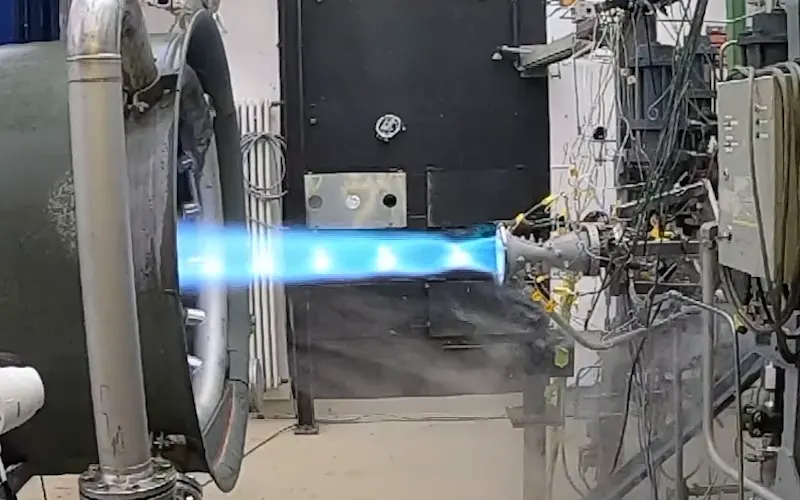
According to the company’s CEO, Adrià Argemí, the €2 million in new financing will be used to bolster Pangea Propulsion’s testing and manufacturing capabilities.
“We are in a phase of strong growth, in which institutional support is key to consolidating this momentum,” said Argemí. “In this context, during the last year we have doubled our team, and this financing will allow us to expand our testing and manufacturing capabilities to accelerate the development of our products and further improve their efficiency.”
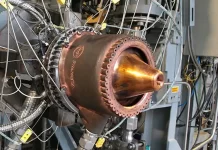
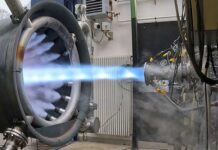
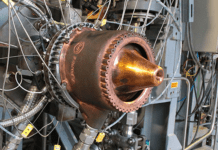
Pangea Aerospace currently offers a range of small in-space propulsion thrusters known as Nereus, alongside its larger Cryox engine for launch vehicle upper and kick stages. The company is also developing its Arcos aerospike engine, which could power both the first and upper stages of a launch vehicle, and its Kronos engine, an ESA-contracted project to develop a propulsion system for future heavy- and super-heavy-lift launch vehicles.
In March 2025, when Pangea Propulsion announced the completion of its Series A funding round, the company said it had eight active contracts with private and public sector clients and an identified pipeline of opportunities totalling nearly €120 million. The company also stated that it expected to double its revenue. It has, however, not shared whether those targets were achieved or provided any indication of its current financial position.
Keep European Spaceflight Independent
Your donation will help European Spaceflight to continue digging into the stories others miss. Every euro keeps our reporting alive.