
Polish rocket builder SpaceForest has set an ambitious goal of capturing up to 70% of the European demand for suborbital flights.
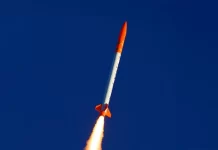
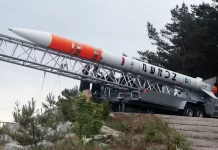
SpaceForest conducted the first two flights of its 11.5-metre-tall suborbital PERUN rocket in 2023, both of which were aborted mid-flight after encountering anomalies. In October 2024, the company received €2.4 million in co-funding from the European Space Agency’s Boost! programme to upgrade the combustion chamber of its in-house developed SF-1000 hybrid rocket engines. The company aims to return the rocket to flight later this month.
Alongside preparations for the rocket’s return, SpaceForest commissioned London-based consultancy Commercial Space Technologies (CST) to assess its market potential. The analysis determined that missions between 100 and 200 kilometres, in line with PERUN’s current capabilities, make up around 45% of European demand for suborbital flights. It further concluded that an upgraded version of the rocket could meet mission requirements covering up to 70% of the total demand. In both instances, payload capacity was not considered a decisive factor, given that PERUN’s 50-kilogram capability is sufficient to support multi-customer missions. The ability to meet demand, however, does not guarantee market share.
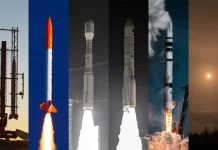
Currently, much of Europe’s demand for suborbital flights is being met by US Orion, Terrier, and Malemute, Brazilian VSB, and Canadian Black Brant solid-fuel boosters. T-Minus from the Netherlands has also completed several flights of its DART and Barracuda suborbital rockets, while PLD Space and HyImpulse have each launched their respective suborbital vehicles once. In July 2024, Poland’s Łukasiewicz Institute of Aviation made history when its ILR-33 Amber 2K became the country’s first rocket to cross the Kármán line and reach space.
The German Aerospace Center (DLR) and Bayern-Chemie jointly developed the purpose-built Red Kite booster, which is expected to cover much of the country’s institutional demand through DLR’s MORABA team. DLR is also preparing for the inaugural flight of its Alduina hybrid rocket booster, scheduled for 2026. The booster is designed to serve as a sounding rocket upper stage, potentially in conjunction with the Red Kite solid-fuel booster.
With such a broad field of established and emerging players, the market is far from lacking competition. While Europe’s drive for sovereign capabilities may discourage reliance on US-manufactured boosters, Brazilian, Canadian, and new European alternatives will continue to vie for their own market share. In this context, SpaceForest’s ambition to capture 70% of demand represents a formidable challenge.
PERUN’s ramp-up to space
According to SpaceForest, the next flight of its PERUN rocket is planned for weeks 42 to 44 of 2025, which fall between 13 October and 2 November, the company told European Spaceflight. The flight will be part of an incremental test campaign that will begin with a flight up to 50 kilometres. If successful, the company will look to complete a second flight in 2025, this one reaching an altitude of 80 kilometres. The company will then attempt its first flight into space in 2026.
SpaceForest plans to conduct the first two test flights from the Central Air Force Training Range in Ustka, Poland. The first flight above the Kármán line is likely to take place from Santa Maria in Portugal. In August, SpaceForest signed an agreement with the Atlantic Spaceport Consortium, the organisation developing a launch facility on the Portuguese island, to conduct a flight of PERUN in the first half of 2026.
While the company focuses on achieving regular flights with the current iteration of its PERUN rocket, it is also studying an upgraded variant called PERUN E (Enhanced). This version of the rocket will be capable of carrying payloads to altitudes of up to 300 kilometres.