
According to public filings submitted in July, MaiaSpace reported €180 million in advance payments in 2024, alongside a €45 million equity injection from its parent company ArianeGroup.
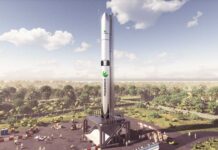
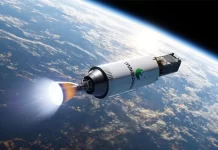
Founded in 2021 as a wholly owned subsidiary of ArianeGroup, MaiaSpace is developing a two-stage rocket called Maia. The rocket will feature a reusable first stage and is designed to be capable of delivering 500 kilograms to low Earth orbit when the first stage is being recovered and 1,500 kilograms when it’s not. The company is targeting an inaugural flight in late 2026.
In its 2024 year-end financial filings, MaiaSpace reported €180 million in “avances et acomptes reçus sur commandes en cours”, which translates to advances and down payments received on orders in progress. Yet in March 2025, the company announced that it had secured its “first commercial contract.” This raises an important question: if no commercial contracts were signed until 2025, what order accounted for the €180 million recorded in 2024?
On 26 March, the French government announced that €500 million in funding had been awarded to 10 NewSpace projects, which included the demonstration of micro and mini launch capabilities. The funding was part of the country’s France 2030 programme, a €54 billion investment programme focused on transforming key sectors of the French economy through technological innovation. MaiaSpace was one of four launch companies selected, along with HyPrSpace, Latitude, and Sirius Space Services.
Although MaiaSpace receiving €180 million out of a €500 million package as one of ten projects might seem disproportionate, French daily Les Échos reported ahead of the announcement that €400 million of the total would be allocated to the four launcher startups. Even at that level, MaiaSpace would still have secured close to half of the total funding, with €220 million split between the remaining three launch startups.
When asked whether the full €180 million had come from the France 2030 award, a MaiaSpace spokesperson told European Spaceflight that the figure includes “payments received for service contracts, including France 2030, as well as those signed, but not publicly announced, with other private industrial partners.” However, the fact that the figure is reported as exactly €180 million raises questions about whether it truly does stem from multiple sources.
In addition to the €180 million in advance payments, the company also received a major investment from its parent in 2024. In March, ArianeGroup completed a €45 million equity investment in MaiaSpace, consisting of €11.25 million in share capital and €33.75 million in share premium. The deal also included the issuance of 10 million share subscription warrants, which could generate a further €40 million if exercised. To date, however, no public filings indicate that the warrants have been exercised.
After expenditures, the company closed out the year with a net cash position of a little over €176.6 million, a sharp increase from €16.9 million in 2023. This substantial cash reserve will likely take the company through the renovation of the old Soyuz launch facility in French Guiana and the inaugural flight of its Maia rocket. The €40 million in unrealized share subscription warrants will be a healthy safety net should the rocket’s debut be less than ideal. The additional €40 million that could be raised through the unexercised share subscription warrants provides potential liquidity in the event of unforeseen delays or the failure of the inaugural flight.