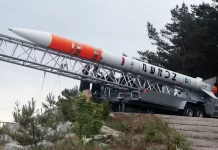

On 19 August, Poland’s Łukasiewicz Research Network’s Institute of Aviation revealed the four payloads that were selected to fly aboard a suborbital rocket under a PLN 1.95 million (€458,000) Polish Space Agency–funded launch service contract.
In April, the Polish Space Agency issued a call for proposals under its “Development of Launch Technology and Demonstration of Launch Capability on Polish Suborbital Rockets” initiative. Through the call, the agency aimed to fund the commercialization of an already planned suborbital rocket test flight and use it to showcase the capabilities of the country’s emerging launch services industry. According to the call, the flight must take place before the end of 2025.
While the agency doesn’t appear to have made a formal announcement, in late July, the Łukasiewicz Research Network’s Institute of Aviation (Łukasiewicz ILOT), in collaboration with consortium partner SpaceForest, invited proposals for potential payloads to be included in the launch. The application process for this call closed on 11 August.
On 19 August, Łukasiewicz ILOT announced that it had received 23 proposals and had selected four. The four selected payloads are from SigmaLabs, Blue Dot Solutions, AstroFarms, and the country’s Military Institute of Aviation Medicine. The launch carrying the four payloads is expected to take place in October, with the rocket reaching an altitude of approximately 60 kilometres.
Consortium partners Łukasiewicz ILOT and SpaceForest have both developed suborbital rockets. The Łukasiewicz ILOT ILR-33 Amber 2K is the only one of the two to complete a space shot, reaching 101 kilometres after being launched on 3 July 2024 from Andøya Space in Norway. While SpaceForest has not yet completed a successful flight of its PERUN rocket, the company is preparing for the first test flight of the rocket following a redesign of the nozzle of the SF-1000 hybrid rocket engine that powers it.
The launch for the Polish Space Agency mission will be carried out aboard a SpaceForest PERUN rocket. While it is not specified why the consortium partners made this decision, it may have been due to payload capacity. The ILOT ILR-33 Amber 2K rocket can carry approximately 20 kilograms, while PERUN more than doubles that with a 50-kilogram capacity. However, the ILR-33 Amber 2K was still capable of meeting the call’s base requirement of delivering a 10-kilogram payload to an altitude of at least 50 kilometres. The deciding factor may instead have been availability, with the Polish Space Agency setting a strict deadline of no later than 31 December 2025.
Update: On 8 September 2025, this article was updated to include the contract value.