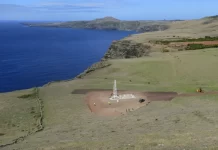

Portugal has granted the Atlantic Spaceport Consortium a licence to build and operate a rocket launch facility on the island of Santa Maria.
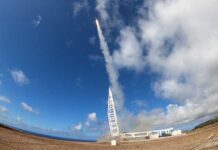
The Atlantic Spaceport Consortium (ASC) was founded in 2019 with the goal of developing a commercial spaceport on the island of Santa Maria, 1,500 kilometres off the Portuguese mainland. In September 2024, the company showcased the island’s suitability as a launch site by launching two small solid-fuel rockets that it had developed in-house.
On 13 August, ASC and the Portuguese Space Agency announced in a joint statement that the consortium had received a licence to operate a launch site on the island. The licence was issued by the country’s Autoridade Nacional de Comunicações (ANACOM), the entity acting as Portugal’s space authority. The licence is valid for five years and does not cover the launch operations themselves, which will be subject to a separate licensing process on a per-launch basis.
“The award of this first licence demonstrates that Portugal is prepared to host launch activities based on a robust and transparent legal framework that is in line with international best practice,” said Ricardo Conde, President of the Portuguese Space Agency. “The Agency has been promoting Portugal’s Atlantic centrality, through the Azores, at an international level and creating, in liaison with the various public entities, the institutional and technical conditions for the country to play an important role in the new European space economy.”
The ASC launch site on the island of Santa Maria will initially be used for suborbital flights. In July, ASC signed an agreement with Poland-based rocket builder SpaceForest to launch its 11.5-metre Perun rocket from the island. Scheduled for the first half of 2026, it will likely be the first launch from the newly licensed site.
In addition to hosting launches, Santa Maria is also set to serve as a landing site for a reusable spacecraft. In November 2024, the Portuguese Space Agency announced that the island had been selected by the European Space Agency to serve as the landing site for the inaugural flight of its Space Rider vehicle. The launch of this Space Rider demonstration mission is currently not expected to occur before 2027.
Keep European Spaceflight Independent
Your donation will help European Spaceflight to continue digging into the stories others miss. Every euro keeps our reporting alive.